
The Values on a Hamilton County Property Record
Assessment supports taxation, full-market value is the roll.s estimate at the stated level of assessment, taxable values reflect exemptions by jurisdiction, and deed consideration is a transfer figure. None is a professional appraisal.
| Value | What It Is | Where |
|---|---|---|
| Assessed value | Assessment and taxable values | the town assessor and Hamilton County Real Property Tax Service |
| Market / appraised value | Full Market Value on the dated roll | the town assessor and Hamilton County Real Property Tax Service |
| Last sale price | Recorded consideration in the transfer trail | County Clerk deed and town assessment roll |
| Land vs improvement | Land component and total assessment | the town assessor and Hamilton County Real Property Tax Service |
[PARAGRAPH - why the assessed value is usually not the sale price, and how the level/ratio of assessment works in New York.]
Looking Up a Hamilton County Property Value
Finding a Hamilton County property value takes a few careful steps. Pick the parcel's town roll first. Then match the parcel number and situs address so you are reading the right property. Read the land value, total assessment, taxable values, and full market value. Note the roll year attached to each figure. For current ratios, use current state municipal data.
- Identify the correct parcel and dated town roll.
- Capture land, total, taxable, full-market, valuation-date, and ratio context.
- Read the recorded transfer rather than assuming the assessment is a sale price.
- Compare only like classes, dates, locations, acreage, and exemption status.
- Assessed value
- Jurisdiction-specific amount after applicable exemptions
- Market / appraised value
- Full Market Value on the dated roll
- Level of assessment
- Municipal level or uniform percent of value
What a Hamilton County Assessor Value Is Not
An assessor's value is a mass-appraisal figure built for taxing, not for selling. Because it rolls on a fixed valuation date, it can also trail the market. A lake parcel may have risen sharply since the last roll. For a number aimed at an actual sale, a licensed appraiser is the right source, since the roll's estimate was never meant to promise what a buyer would pay.
Value vs price. [1-2 sentences - a Hamilton County assessor value is not what a property will sell for; for a sale or loan, get a licensed appraisal.]
Read Every Hamilton County Value With Its Roll Date
Town assessment rolls in Hamilton County print separate land, total, and taxable values. They also carry a FULL MARKET VALUE field. They also list the property class, exemption codes, and district values. So do the valuation date and the taxable-status date. Save that whole context. A lone dollar figure invites confusion. With no municipality, year, or field label, it could read as a sale price or a current appraisal.
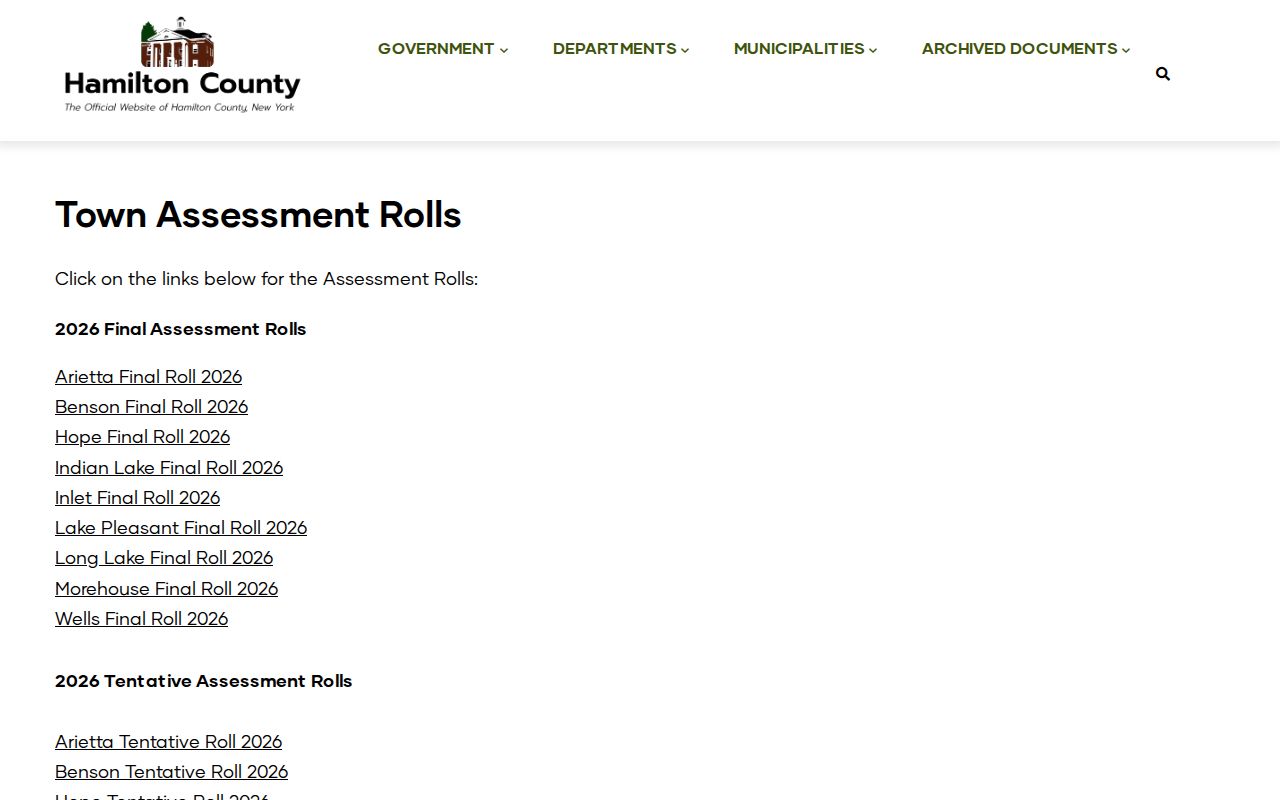
The county's annual roll page posts final and tentative links. They cover 2018 through 2026 for all nine towns. When you study change over time, keep the town and roll type consistent. Normalize the parcel number first. Then check whether ownership, acreage, class, or exemption status changed. Check the parcel's configuration too. Any of those can explain a difference the market didn't cause.
The Hamilton County roll library holds the published rolls for each town.
Speculator presents one wrinkle. Its values appear on the Lake Pleasant roll, so choose that town and keep any village-purpose figures separate. The village maintains no independent assessment roll outside that town structure.
Hamilton County Assessment Levels Vary by Municipality and Year
Dated 2022 examples show why a countywide assumption fails. Lake Pleasant and Speculator material reflected a 90 percent uniform level that year. Inlet showed 100 percent. A Benson example came in at 80 percent. Those are historical figures only. So pull current equalization rates and residential assessment ratios from New York State's municipal data for the exact municipality and year you care about.
Exemptions shift the relationships too. STAR and similar codes can lower taxable values for one jurisdiction. They do not touch a deed's consideration. County, town, school, and village taxable fields can therefore diverge on the same parcel. Read the exemption code and the applicable column before comparing two properties.
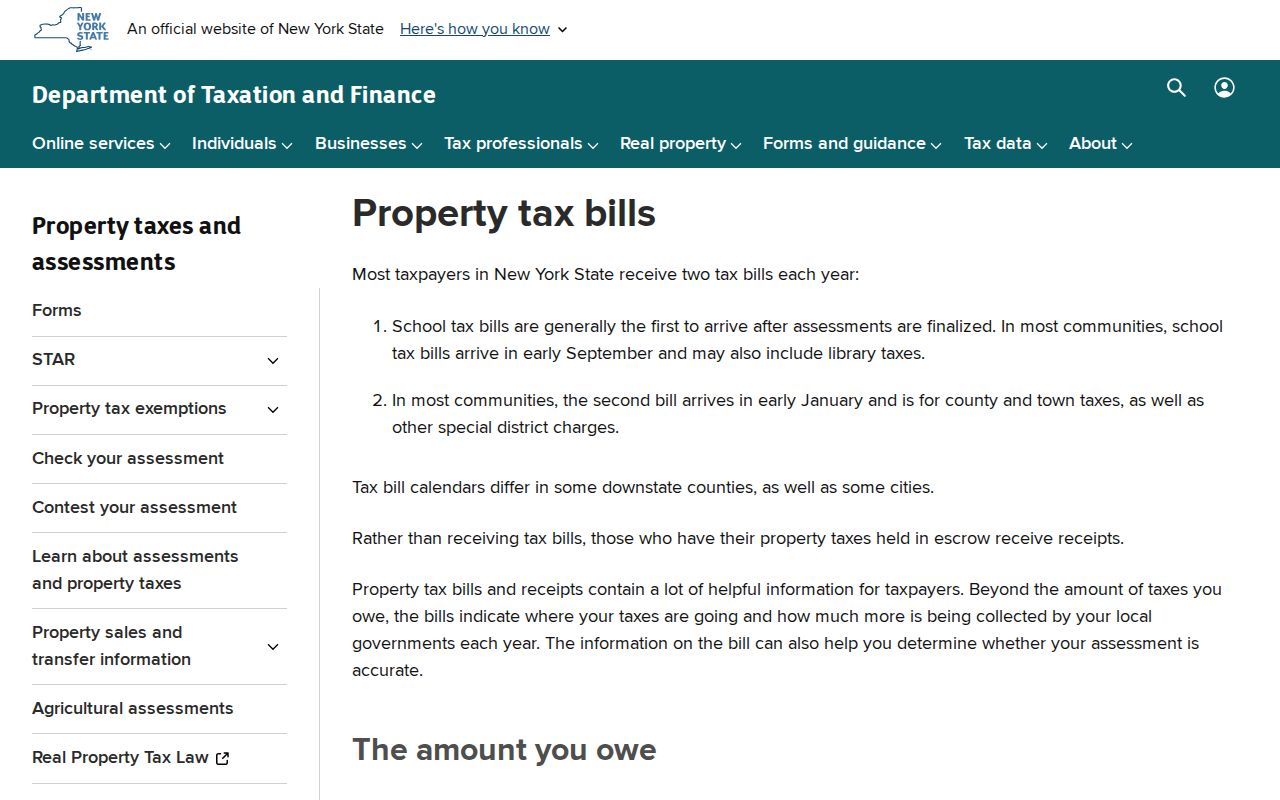
The state tax-bill explanation defines the terminology these fields use.
Compare Hamilton County Properties by Class and Setting
Comparisons only work between like parcels. A seasonal waterfront residence and a village one-family house are not sound direct comparables. A vacant lot, an apartment property, or a manufactured home is different again. An exempt institutional parcel stands apart as well. Class, acreage, lake access, improvements, special districts, exemptions, and the local assessment level all shape the record. Even neighbors on the same road can carry different tax descriptions and waterfront characteristics.
Recorded deed consideration adds a data point, but it needs context too. A family quitclaim, an estate transfer, or a foreclosure-related deed may not reflect an open-market sale. Neither may a partial conveyance or a bundled transaction. The whole assessed parcel may not even be what changed hands. Pull the deed through the County Clerk. Compare its legal description with the roll before treating a number as the parcel's last sale.
An assessed or full-market value is not an appraisal. It will not promise what a buyer would pay. Use it to understand the public assessment record. Compare like parcels cautiously. Prepare for a conversation with the assessor. Or track dated roll changes over several years.
For a trend, download the same town's final rolls and match the normalized parcel number. Record the valuation and taxable-status dates. Then separate those changes from genuine market movement. A change may come from a parcel split, a new improvement, a class change, an exemption, or an owner update. The county's vendor transition is one more reason to keep dated PDFs instead of trusting a current screen alone.
An assessment challenge moves on its own calendar. Inspect the tentative roll and the current local calendar promptly. Discuss factual errors and comparables with the assessor. Then follow the prescribed New York form and the Board of Assessment Review process. The value record explains the numbers, but the formal grievance runs through the tax-record process.
Keep sale evidence and assessment evidence in separate columns when you present a conclusion. Label the deed date and consideration. Label the roll year and assessment, the full-market figure, and the current municipal ratio source. Add the class, the acreage, and any exemptions. A transparent comparison beats one unexplained estimate. It also shows clearly when professional appraisal work is still required.
Note: Date every value source consulted and keep its municipality attached.
Recheck the current roll before a filing or transaction. A saved value can go stale after a reassessment, new construction, an exemption change, or a parcel split.