
What Hamilton County Property Tax Records Show
Hamilton County tax rolls break every parcel into its parts. You get land value, total assessment, full-market value, and any exemptions, plus special district charges. Taxable values are listed separately for county, town, school, and village purposes. The Treasurer's office tracks delinquent tax information. Assessors and Real Property Tax Services keep the valuation records behind each bill.
| Field | What It Shows | Where |
|---|---|---|
| Assessed value | Assessed and jurisdiction-specific taxable values | the town assessor and Hamilton County Real Property Tax Service |
| Market / appraised value | Full Market Value shown on the assessment roll | the town assessor and Hamilton County Real Property Tax Service |
| Exemptions | STAR, veteran, and other roll exemption codes where applicable | the town assessor and Hamilton County Real Property Tax Service |
| Tax bill & status | Treasurer balance or payment status | Hamilton County Treasurer |
| Taxing districts | School, town, county, village, fire, refuse, and other districts | Hamilton County Treasurer |
Three different numbers appear across these records. None of them is a guaranteed market price. Assessed value is just one input in the tax calculation. Full-market value is the roll's estimate, shaped by each municipality's level of assessment. Recorded consideration belongs to the transfer record. It reflects a past sale, not what a buyer might pay today.
Looking Up a Hamilton County Tax Bill
[PARAGRAPH - Research §4. How to find the tax bill and payment status for a Hamilton County property, by address or parcel number.]
- Identify the town roll and parcel before using the Treasurer.s delinquent-tax link.
- Keep the tax year and jurisdiction with every amount.
- Compare county, town, school, and village taxable columns.
- Confirm any balance or enforcement status directly with the Treasurer.
- Assessed value
- Taxable assessed value: the assessment remaining for a jurisdiction after applicable exemptions
- Mill rate / levy
- Tax rate: the rate applied to taxable assessed value
- Homestead exemption
- STAR: New York school-tax relief reflected in qualifying records
- Tax lien
- Tax lien: a legal claim associated with unpaid property tax
Appealing a Hamilton County Assessment
A Hamilton County owner who disagrees with an appraisal can contest it. File with the review board before the deadline and bring evidence, such as recent sales of comparable parcels, to support a lower assessed value.
Appeal window. Hamilton County assessment challenges follow the tentative-roll and Grievance Day calendar published for the municipality with the the local Board of Assessment Review; missing the window means waiting for the next cycle.]
Hamilton County Town Rolls Separate the Taxing Jurisdictions
Read each Hamilton County town roll as a dated set of assessment fields. Do not treat it as a simple bill. One parcel entry can carry land value, total assessment, full-market value, and exemption codes. It may also show separate taxable columns for county, town, school, and village purposes. Fire, refuse, and health districts may show up on their own lines. Exemptions can differ by jurisdiction. Because of that, those taxable columns can disagree even though they describe a single parcel.
Speculator adds a local wrinkle worth knowing. It is the county's only incorporated village. It also sits inside the Town of Lake Pleasant, so village-purpose values appear within the Lake Pleasant roll. A Speculator mailing address does not create a separate assessment roll. Keep both place names in your notes. Then ask which jurisdiction a quoted figure represents before relying on it.
For a fuller picture, the New York property-tax bill guide explains how exemptions, taxable assessed value, rates, and full-market value fit together.
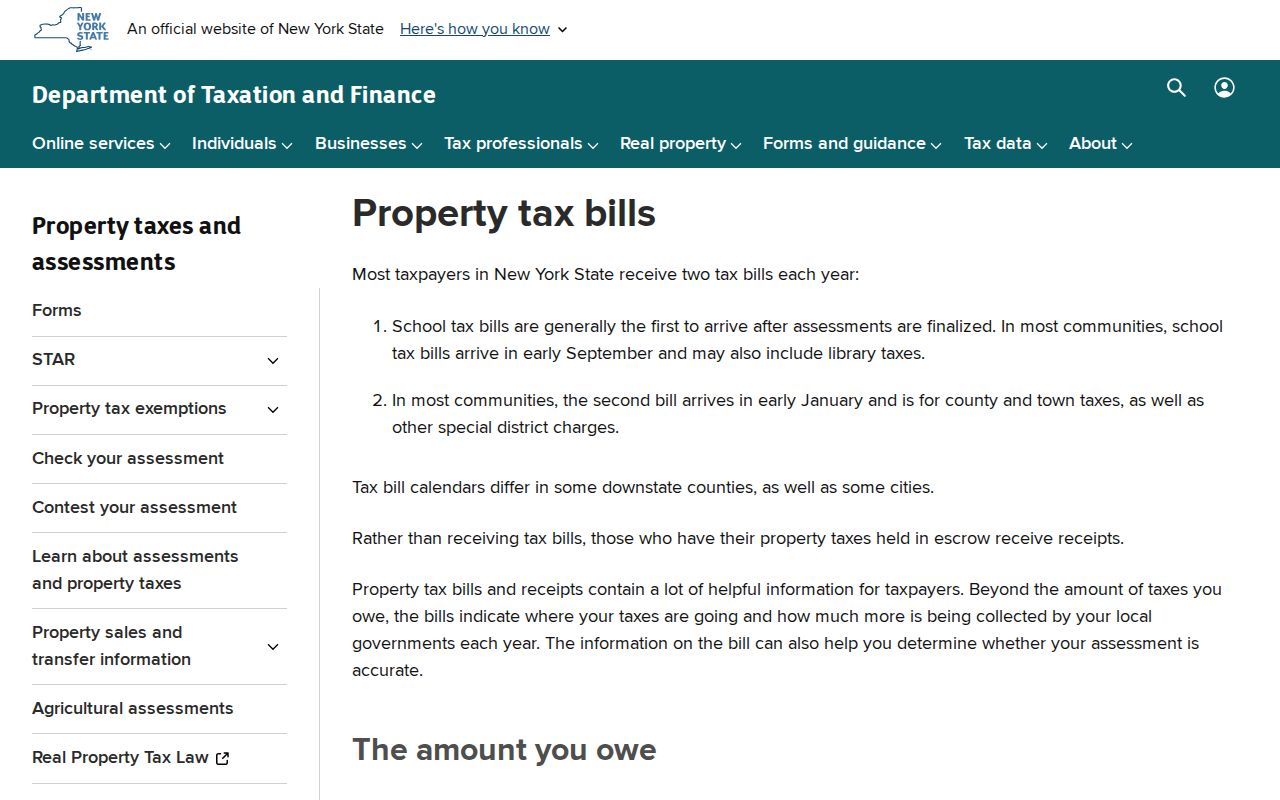
Always attach a year and a municipality to any figure you copy. A number stripped of those two facts invites comparison against the wrong roll or the wrong assessment level.
Assessment Level Examples Are Dated, Not Countywide Rules
Assessment levels vary by town, and older examples make the point. In the 2022 materials, Lake Pleasant and Speculator reflected a 90 percent uniform level. Inlet showed 100 percent. A Benson example showed 80 percent. That spread proves municipal variation exists. It does not mean Hamilton County assesses every property at one percentage today. For current figures, retrieve equalization and residential assessment-ratio data from the state municipal data tools.
Property class matters as much as geography. A seasonal waterfront residence is not comparable to a village one-family home. It also differs from vacant land, an apartment property, manufactured housing, institutional land, or an exempt parcel. Acreage, water access, improvements, and special districts can all shift the assessment. Exemption status can shift the taxable result too.
The state assessment page also covers the tentative roll and grievance process. The New York assessment-roll guidance lays out the details.
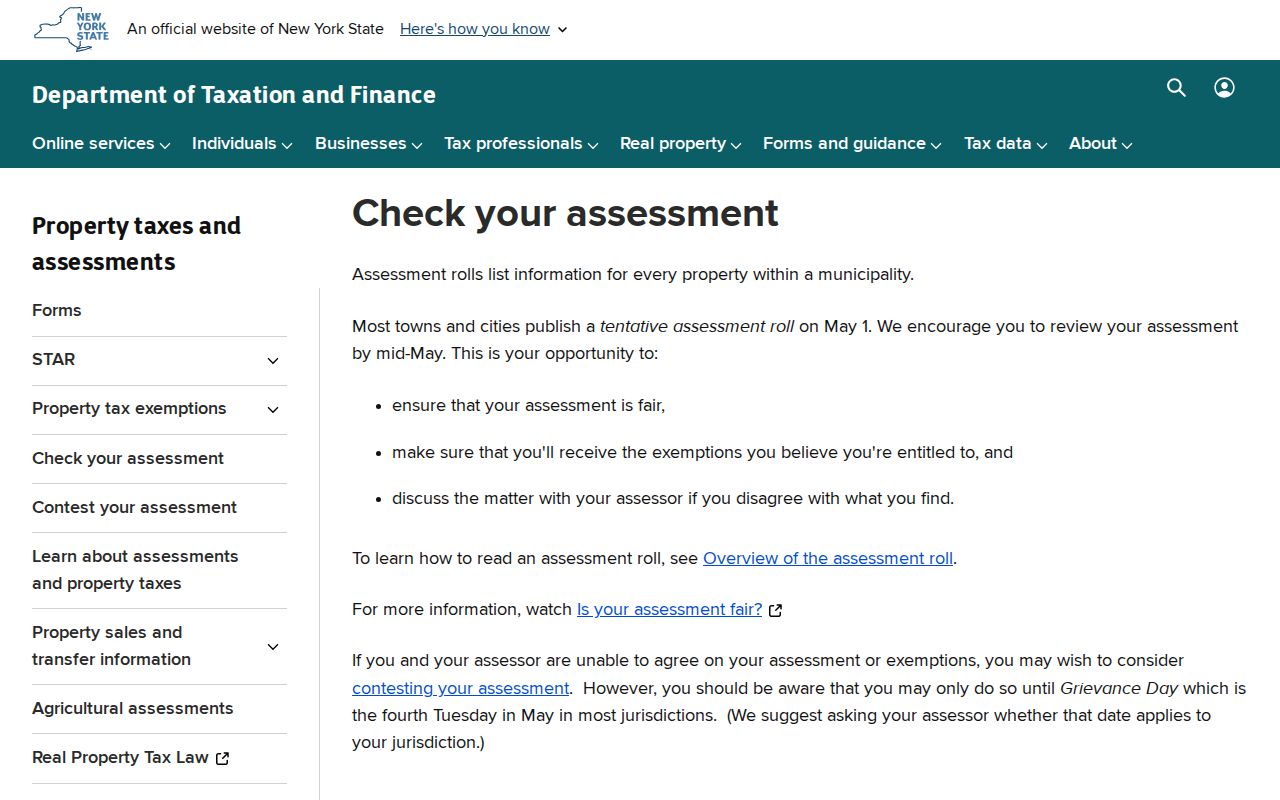
Move quickly once the tentative assessment appears. Review it, then talk with the assessor about the record behind it. If a formal challenge is still needed, use the prescribed state complaint form and the local Board of Assessment Review route.
Hamilton County Treasurer Records Answer the Delinquency Question
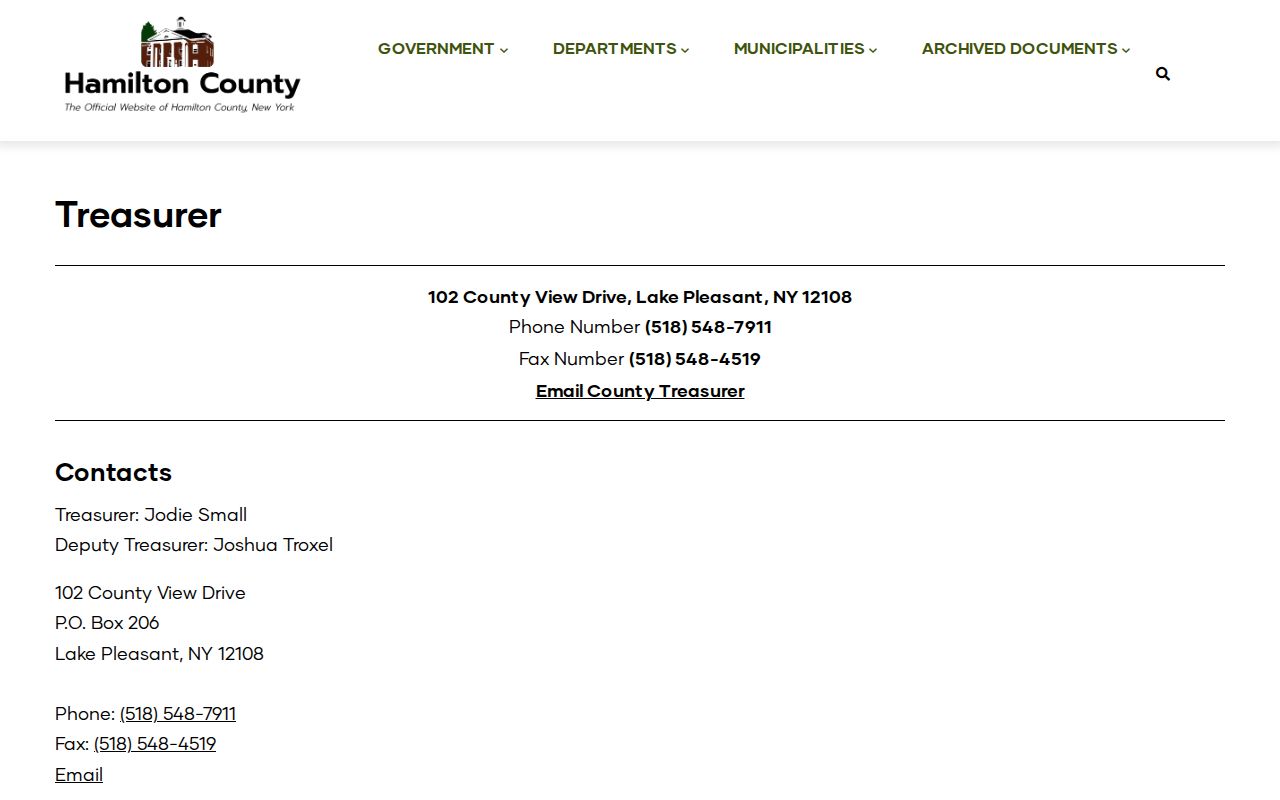
Two offices answer two different questions. The assessment office explains value. The Treasurer handles delinquent-property-tax payment and lookup. Never infer a current balance from a roll, an old bill, or a deed notation. Confirm the tax year, parcel number, amount, status, and payment instructions through the official channel. The Hamilton County Treasurer page is the place to start.
Start with the roll code. Exemption research in Hamilton County often reaches back to the assessor's own determination. Codes like Basic STAR, Enhanced STAR, and veteran exemptions touch one taxable column but not another. Ask the assessor what a code means for that parcel and year. The total assessment alone is not what every jurisdiction taxes.
When comparing years, rely on final rolls. Tentative material shows only its own stage. Splits, mergers, new construction, classification changes, ownership changes, and exemption changes can all explain a jump. It may look like a plain revaluation at first glance.
Keep a delinquency question separate from a routine balance check. A past-due amount, a lien, an enforcement notice, a redemption question, and a recorded tax deed are distinct stages. Different offices hold them. The Treasurer confirms status. The Clerk supplies recorded deeds and liens. Court files matter when a proceeding exists. One old unpaid figure never means a parcel is headed to sale.
If a linked payment vendor will not show the history you need, contact the office. Bring the APN, owner label, town, and the years involved. A focused written FOIL request can describe a document and the format you want. The agency does not have to build a new calculation, though. Save the contact date and the staff response with any payoff or deadline details. Those operational facts, unlike a posted annual roll, can shift during the collection cycle.
A complete Hamilton County property-tax note names the municipality, APN, roll type and year, assessment, full-market value, each taxable column, exemption codes, and the source of any balance. Say whether a figure came from an assessment roll, a tax bill, a Treasurer response, or a recorded enforcement document. That discipline prevents the most common mix-ups. It stops an assessed value read as a bill, a market estimate read as a sale price, or a stale delinquent amount read as the current payoff. Verify payment and deadline decisions directly with the responsible local office.