
What the Hamilton County Current Owner Record Shows
[PARAGRAPH - Research §3. The fields that name the current owner of record for a Hamilton County property and what each means.]
| Owner of Record | Grantee names on the newest recorded deed |
|---|---|
| Vesting / Tenancy | The exact vesting form printed in the instrument |
| Mailing Address | Current Owners Address on the roll |
| Situs Address | Situs address and APN |
| Deed Reference | Newest deed book, page, or instrument reference |
| Ownership Since | Recording date of the newest confirmed conveyance |
One caution matters here. The roll lists an assessed owner plus a separate mailing address for tax correspondence, and the two serve different purposes. Neither one establishes residence or occupancy. A deed recorded last week may sit at the Clerk's office long before the next annual roll catches up, so the roll reflects its own date rather than the newest transfer.
Confirming the Current Owner in Hamilton County
[PARAGRAPH - Research §2 + §3. How to confirm the current owner beyond the assessor roll, using the latest recorded deed.]
- Read CURRENT OWNERS NAME on the latest available town roll.
- Follow the deed book or page and search for later instruments.
- Use state entity records for an LLC while respecting that a trust may require deed or probate research.
- Record the mailing address separately from the property location.
- Owner of record
- Owner of record
- Vesting
- Vesting language must be read from the deed
- Registered agent
- New York business-entity filing
Reaching a Hamilton County Property Owner
[PARAGRAPH - Research §3 + §13. The owner's mailing address on the tax roll is the lawful way to reach an owner; what stays private and the limits.]
Lawful use. [1-2 sentences - contacting a Hamilton County owner through the public mailing address is fine for property matters; using owner information to harass or intimidate is a crime under New York law.]
Date the Hamilton County Owner-of-Record Card
A good current-owner note reads like a record card, not a bare name. Write down the town and the situs. Add the parcel number, the roll year, the valuation date, and the taxable-status date. Add the owner's name, the owner's mailing address, and the deed book and page. Include the property class and the newest deed you checked. That discipline makes the conclusion reproducible and exposes any timing gap.
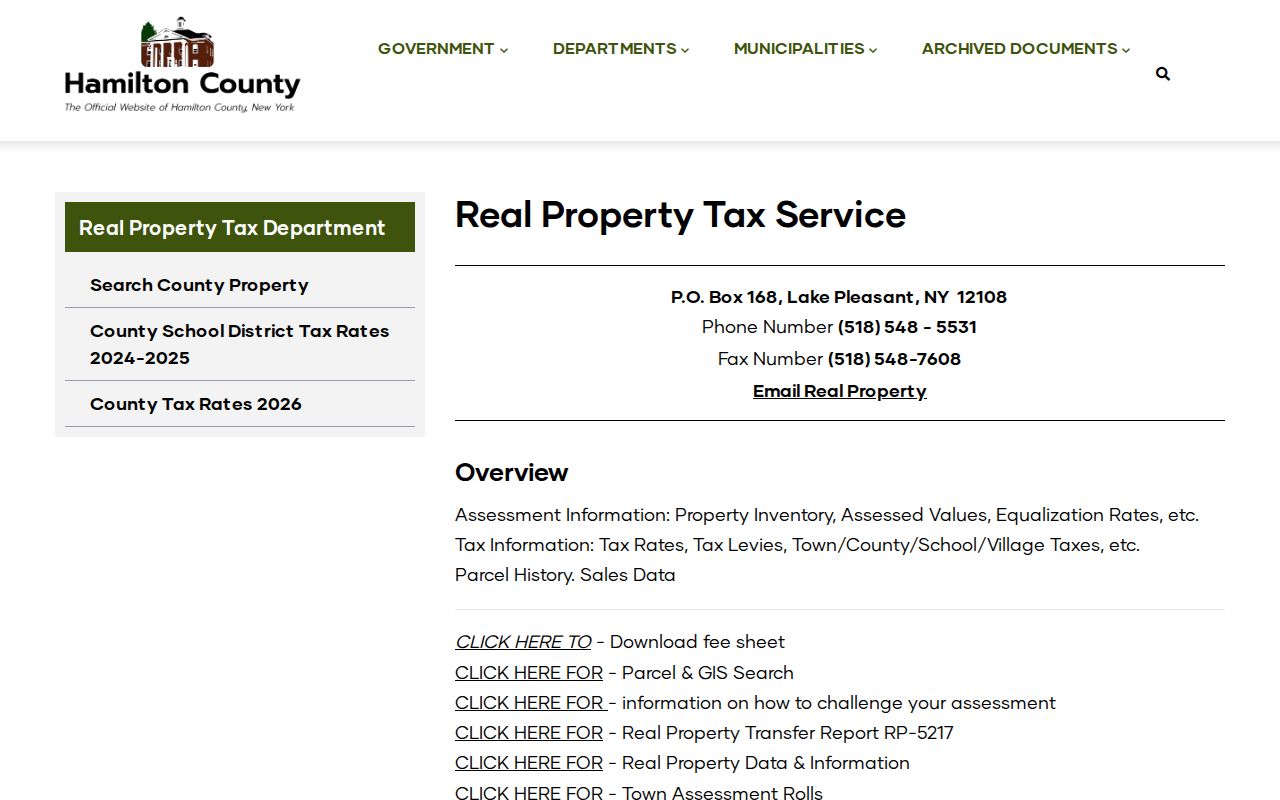
Assessment ownership and recorded title move on different clocks. A deed filed after taxable-status day can be newer than the annual roll. So treat each record as dated evidence. Hamilton County publishes no parcel-specific schedule for that lag. The safe wording: the roll shows an assessed owner as of its date. The newest recorded deed shows the latest confirmed transfer. The Hamilton County Real Property Tax Service page supplies the official starting links.
If the online vendor blocks access, fall back on the posted town roll. Speculator parcels belong to the Lake Pleasant roll even when the postal or village label says Speculator.
Read the Latest Hamilton County Grantee and Vesting Language
A deed should match the property through more than a name. Check the town first. Check the legal description too. Look at survey or subdivision references, the prior deed citation, and parcel clues. Then read the grantee clause closely. Multiple people, trustees, executors, estates, LLCs, and public bodies all demand exact labels.
SearchIQS is the county's online document route. Its published access prices are simple: $15 for one day, $25 for thirty days, and $0.65 per printed page. The county states no complete online cutoff. A known deed reference may be missing. An image may be unavailable. A later transfer may be uncertain. In those cases, contact the Clerk. Ask for the record by party, date, book and page, and description.
Not every recording conveys title. A mortgage, lien, assignment, release, survey, APA permit, or judgment can sit near a deed. None of them moves ownership an inch. Identify the document type before treating a later date as a transfer. An index-only hit is a pointer, not the legal text itself.
Current Hamilton County Ownership Has Practical Limits
The owner mailing address serves tax correspondence, not proof of residence. Hamilton County's seasonal and waterfront pattern fills the roll with out-of-area addresses, so distance means little. A person's name on the roll does not establish that the individual occupies the site. It does not prove control of access. Nor can it show who speaks to every question about the land.
A current-owner lookup cannot certify clear title. It may miss an unindexed filing, an off-record interest, an inheritance dispute, or a boundary problem. Bring a title professional or attorney in for a title conclusion. Use a licensed surveyor for a line on the ground. And use public records lawfully, never to harass or target anyone.
When records conflict, do not silently pick a side. State that the dated roll names one assessed owner. A later deed may name a newer grantee. Cite both dates. Real Property Tax Service handles assessment corrections. The Clerk handles recording and indexing questions. Each office controls its own record.
Parcels held by an estate, trust, or LLC often need more than a surname search. Keep the full fiduciary or entity label intact. Consult the recorded instrument itself. State business records add entity context only. A registered agent or mailing contact is not automatically the beneficial owner of the land.
Close any owner-of-record review with an explicit verification date. List the latest roll consulted. List the latest deed searched. Note any later mortgage or lien that did not convey title. Add any unanswered indexing question. If a new deed postdates the roll, explain the timing instead of calling the assessment database wrong. When no later deed turns up, say none appeared through the access method and date used. Do not say none exists. Hamilton County's unpublished online cutoff and vendor limits make that distinction essential.
Repeat the check near any closing, estate distribution, or boundary agreement. Repeat it near any other event that depends on present title. A clean search can go stale the moment another instrument is recorded.